The TB-303: How a Failed Bass Guitar Became Acid House's Secret Weapon
 Therapy SoundField notes
Sometimes the most revolutionary sounds come from the most unlikely places. The Roland TB-303 was designed as a practice tool for guitarists — a way to lay down simple bass lines while jamming alone. Instead, it became the accidental architect of acid house, creating those squelchy, hypnotic patterns that still make dance floors lose their minds today.
The quick version: Released in 1981, the TB-303 was a commercial flop that Roland discontinued after just three years. But when Chicago house producers got their hands on cheap second-hand units in the mid-80s, they discovered that pushing the machine beyond its intended limits created something extraordinary — the liquid, psychedelic sound that would define acid house and influence electronic music forever.The Original Vision (That Nobody Wanted)
Roland’s engineers had a simple goal: create an affordable bass accompaniment for solo musicians. The TB-303 (Transistor Bass) was paired with the TR-606 drum machine as the “MC-202 MicroComposer” system, marketed to bedroom guitarists who needed a rhythm section.
The problem? It sounded nothing like a real bass guitar. The 303’s single oscillator and ladder filter created something far stranger — a nasal, rubbery tone that seemed to breathe and squelch with a life of its own. Musicians looking for authentic bass sounds were unimpressed.
- Programming nightmare. The step sequencer was notoriously difficult to use, requiring complex button combinations just to enter a simple pattern.
- Limited polyphony. Only one note at a time, making it useless for chords or complex arrangements.
- Weird tuning. The filter and resonance controls created sounds that seemed to mock traditional bass playing.
By 1984, Roland had quietly discontinued the TB-303. Thousands of units sat unsold in music stores, eventually making their way to pawn shops and second-hand dealers for under $100.
Chicago’s Happy Accident
While the TB-303 was failing in guitar shops, something extraordinary was happening in Chicago’s underground house scene. Producers like DJ Pierre, Spanky, and Herb J were experimenting with any cheap gear they could find, pushing machines far beyond their intended use.
The breakthrough moment came around 1985 when DJ Pierre discovered a TB-303 at a local music store. Instead of trying to make it sound like a bass guitar, he embraced its weirdness — cranking the resonance, tweaking the filter cutoff in real-time, and letting the machine’s quirky character shine through.
The 303 didn’t sound like anything else because it wasn’t trying to be anything else — it was pure electronic expression.
The result was “Acid Tracks” by Phuture (DJ Pierre’s group with Spanky and Herb J), recorded in 1985 but not released until 1987. That squelchy, hypnotic bassline didn’t just define a song — it birthed an entire genre.
The Sound That Launched a Thousand Raves
What made the TB-303 so special wasn’t its technology — it was how it responded to human touch. The filter cutoff and resonance knobs became instruments themselves, allowing producers to sculpt the sound in real-time, creating those signature “acid” sweeps and squelches.
- The filter sweep. Slowly opening the low-pass filter created that classic “rising” effect that builds tension on the dance floor.
- Resonance magic. High resonance settings made the filter self-oscillate, creating whistling, screaming textures that cut through any mix.
- Pattern programming. The step sequencer’s limitations forced producers into repetitive, hypnotic patterns that were perfect for extended dance mixes.
- Accent and slide. These programming functions created the liquid, connected basslines that made tracks feel alive and breathing.
From Chicago to the World
Acid house didn’t stay in Chicago long. By 1987, tracks like Phuture’s “Acid Tracks” and Fast Eddie’s “Acid Thunder” were finding their way to London, where they sparked the Second Summer of Love and the UK rave scene.
British producers like A Guy Called Gerald, 808 State, and The Shamen took the 303 sound and ran with it, creating anthems like “Voodoo Ray” and “Pacific State.” The little silver box that nobody wanted was now the sound of youth rebellion across two continents.
The Technical Magic Behind the Mayhem
Understanding why the TB-303 sounds so distinctive requires diving into its circuitry. Roland’s engineers created something unique, even if they didn’t realise it at the time.
- The ladder filter. Based on the Moog design, this 24dB/octave low-pass filter was the heart of the 303’s character.
- Single oscillator. Unlike polyphonic synths, the 303’s single sawtooth/square wave oscillator created focused, punchy sounds.
- Envelope and accent. The built-in envelope generator and accent function added dynamics that made patterns feel musical rather than mechanical.
- Analog drift. Slight tuning instabilities gave each note character, making loops feel alive rather than static.
The 303’s Lasting Legacy
Today, the TB-303 is one of the most sought-after pieces of vintage gear, with original units selling for thousands of pounds. But its influence extends far beyond collector value — that squelchy, acidic sound has become part of electronic music’s DNA.
From modern acid house revivals to techno, trance, and even pop music, you can hear the 303’s influence everywhere. Roland has released multiple reissues and software emulations, while countless other manufacturers have tried to capture its magic.
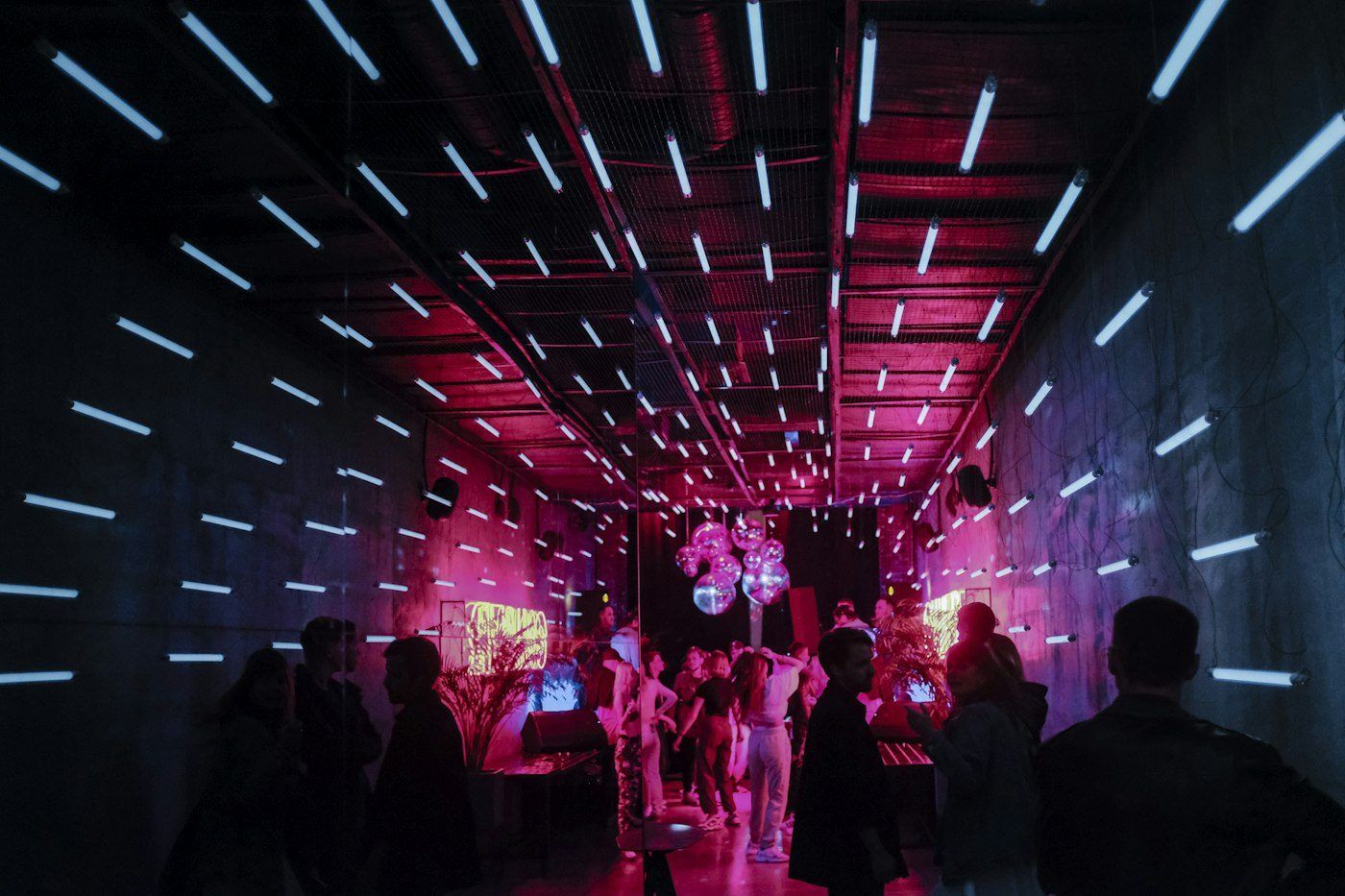
On dance floors like ours at Hello Goodbye, that distinctive acid sound still works its magic every Thursday. Whether it’s a classic Phuture track or a modern producer channeling that 303 energy, there’s something about those squelchy basslines that speaks directly to your body’s need to move.
Therapy Sound · Vancouver events
House, techno and live shows across the city
Frequently asked questions
Why was the TB-303 discontinued so quickly?
Roland discontinued the TB-303 in 1984 after only three years because it failed to find its intended market. Guitarists wanted realistic bass sounds, not the weird, squelchy tones the 303 produced. Sales were poor, and Roland moved on to other products, having no idea they’d created a future classic.
What makes the 303 sound different from other bass synthesizers?
The TB-303’s unique character comes from its specific combination of a single analog oscillator, Moog-style ladder filter, and built-in sequencer with accent and slide functions. The filter’s resonance can self-oscillate, creating screaming, whistling sounds that cut through mixes. Its analog circuitry also adds subtle drift and character that digital recreations struggle to match.
Can you get the 303 sound without buying an original unit?
Yes, several options exist for achieving 303-style sounds. Roland has released the TB-03 Boutique and TB-303 Software Rhythm Composer, while companies like Cyclone Analogic and x0xb0x make hardware clones. Software plugins like AudioRealism Bass Line and Phoscyon also offer convincing emulations, though many producers still prefer the character of original analog hardware.
What are some essential acid house tracks featuring the TB-303?
Key tracks include Phuture’s “Acid Tracks” (the original), A Guy Called Gerald’s “Voodoo Ray,” 808 State’s “Pacific State,” Hardfloor’s “Acperience,” and Josh Wink’s “Higher State of Consciousness.” These tracks showcase different approaches to the 303, from hypnotic loops to dramatic filter sweeps that defined the acid house sound.
Therapy Sound is Vancouver’s home for house. The music, the floor, and the culture around it. Our Thursday residency at Hello Goodbye is the heart of it, not the whole story.